June 16, 2026
An emergency electrical event places immediate pressure on any commercial facility, especially when critical systems depend on uninterrupted power. In these situations, an electric panel replacement is often the central corrective action that restores safety, stability, and operational continuity. Businesses typically face heightened risks when panels begin to fail under load, and the response must balance speed with strict technical precision.
The process is not limited to swapping hardware. It involves structured assessment, controlled de-energization, compliance verification, and careful restoration of circuits that support essential operations. An electric panel upgrade carried out under emergency conditions follows a disciplined sequence designed to reduce downtime while maintaining full electrical safety standards.
Initial Response and Assessment During an Electrical Emergency
Rapid On-Site Evaluation Procedures
The first stage of an emergency response focuses on rapidly determining the condition of the electrical system. Technicians prioritize identifying whether the issue originates in the main panel, subpanels, or connected distribution components. During an electric panel replacement, this evaluation must be completed under time-sensitive conditions without compromising diagnostic accuracy.
Initial inspection typically includes thermal assessment, breaker behavior analysis, and visual identification of damage such as scorching, corrosion, or mechanical failure. These observations help establish whether partial repair is possible or whether full replacement is required. The urgency of the situation often accelerates decision-making, but structured diagnostic protocols remain essential.
Once the condition is understood, technicians map the immediate risks to operational systems. This includes identifying circuits tied to life-safety equipment, refrigeration systems, server infrastructure, or production machinery. The goal is to stabilize the environment before any physical work begins.
Safety Isolation and Load Assessment
After initial evaluation, the system must be safely isolated. This involves controlled shutdown procedures that prevent arc flash hazards and protect downstream equipment. In an electric panel upgrade context, isolation is especially critical because compromised panels may behave unpredictably under load.
Load assessment is conducted simultaneously to determine how electrical demand is distributed across circuits. Technicians evaluate whether existing capacity is sufficient or if the panel has been consistently overloaded. This step also helps identify any hidden faults in wiring or breakers that may have contributed to the failure.
The information gathered during isolation and load assessment informs the upgrade strategy. It ensures that the replacement panel will be properly sized for both current and anticipated electrical demands, reducing the likelihood of repeat failures.
Temporary Power Planning
When a full shutdown would severely disrupt business operations, temporary power solutions may be introduced. These systems allow essential equipment to remain operational while the main panel is offline. During an electric panel replacement, temporary power planning becomes a critical continuity measure.
Technicians configure temporary distribution systems to support only priority circuits. This requires careful segmentation of loads and strict adherence to safety protocols. Non-essential systems are typically deactivated to prevent overload and maintain stability.
The planning process also includes coordination with facility managers to determine acceptable downtime windows. This ensures that the upgrade proceeds with minimal disruption while maintaining operational priorities.
Technical Execution of an Electrical Panel Upgrade
Panel Removal and System De-Energization
The physical execution begins with complete de-energization of the affected system. This step eliminates electrical hazards and prepares the site for safe removal of the existing panel. In an electric panel upgrade, this stage is often the most sensitive due to residual energy risks and interconnected circuits.
Technicians carefully disconnect feeders, branch circuits, and grounding systems. Each connection is documented to ensure accurate reinstallation. The panel is then removed in a controlled manner to avoid damage to surrounding infrastructure or conduit systems.
System de-energization also includes verification testing to confirm that no active current remains in the panel housing or connected wiring. This final confirmation is essential before installation begins.
Installation and Code Compliance Standards
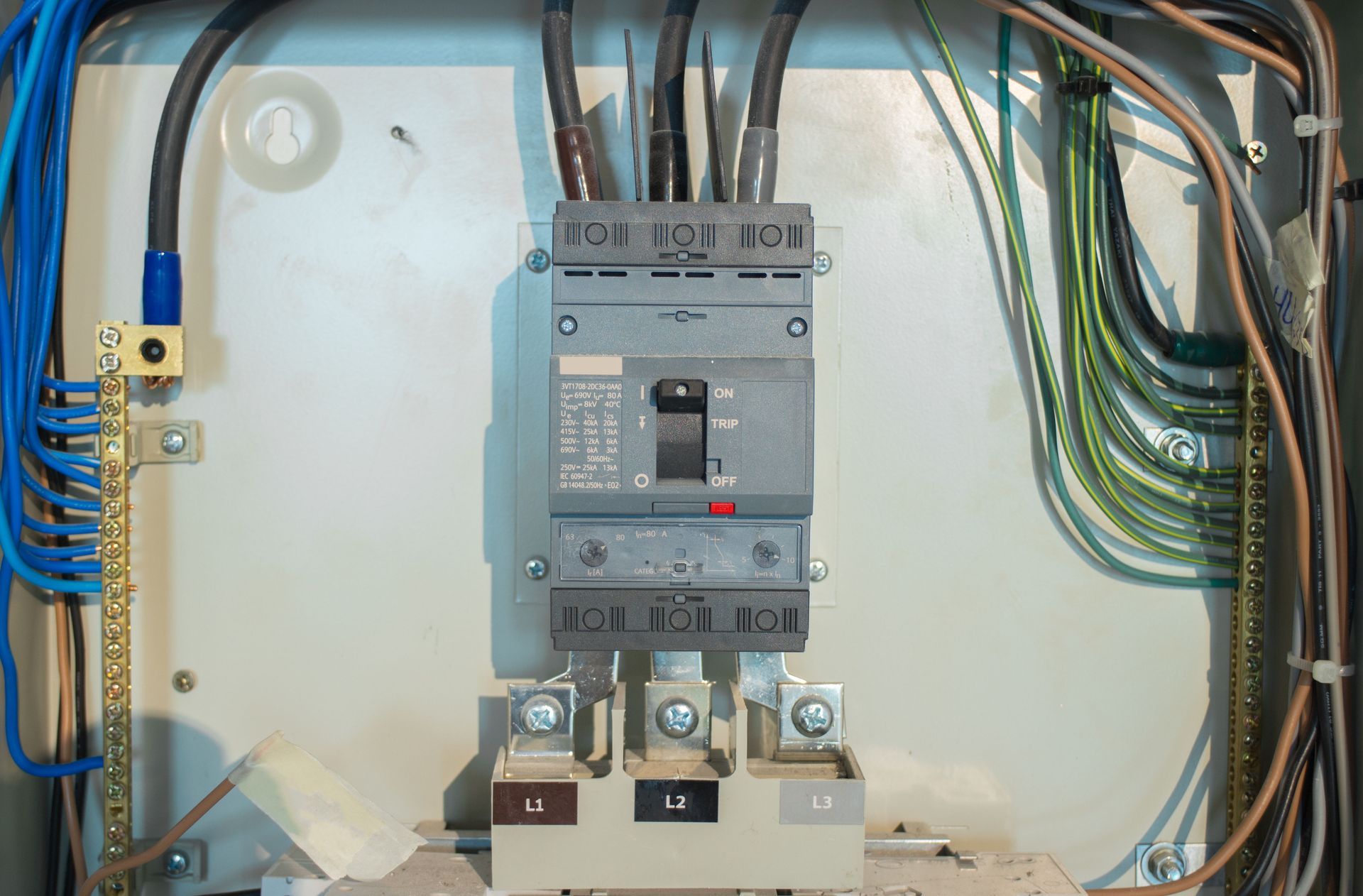
The installation phase involves mounting the new panel, connecting circuits, and ensuring all terminations meet required electrical standards. According to the Office of Congressional Workplace Rights, commercial electrical panels must maintain at least three feet of clear space in front and a minimum width of 2.5 feet (or the width of the unit, whichever is greater) to ensure safe and immediate access to the panel during emergencies. This clearance requirement is re-established during installation to ensure compliance and safe service access.
All commercial electric panels must align with applicable electrical codes, including grounding specifications, breaker sizing, and conductor compatibility. Technicians verify that all components are rated appropriately for the facility's load profile.
Attention is also given to structural integrity and panel positioning. Proper alignment ensures long-term durability and reduces stress on electrical connections. Once installed, the system is prepared for staged re-energization.
Load Rebalancing and Circuit Verification
After installation, circuits are reconnected, and load distribution is carefully balanced across phases. This step ensures that no single phase is overloaded, which could compromise system stability. During an electric panel upgrade, this balancing process is critical for preventing future disruptions.
Each circuit is individually tested to confirm proper voltage, continuity, and breaker response. Technicians verify that sensitive equipment receives stable power without fluctuations that could cause operational issues.
Final verification also includes stress testing under simulated load conditions. This ensures the system performs reliably under real-world operational demands before full restoration is approved.
Operational Impact and Post-Upgrade Stabilization
Business Downtime Reduction Strategies
Minimizing downtime is a primary objective during any emergency electrical intervention. A well-executed electric panel replacement is structured to restore core operations as quickly as possible while maintaining safety and compliance standards.
Technicians prioritize critical circuits first, allowing essential systems to resume operation before non-essential loads are reintroduced. This phased restoration helps businesses regain partial functionality even before full completion.
Communication between technicians and facility managers plays a key role in coordinating restoration timelines. Clear sequencing ensures that operational priorities are aligned with electrical system readiness.
System Testing and Quality Assurance
Once the system is re-energized, comprehensive testing ensures that all components are functioning correctly. This includes verifying breaker responsiveness, voltage stability, and load distribution across all circuits. An electric panel upgrade is not considered complete until all performance metrics are confirmed within acceptable ranges.
Quality assurance also involves thermal monitoring to identify any abnormal heat buildup in connections or breakers. Early detection of these issues helps prevent future failures and ensures system reliability.
Technicians document all test results for compliance and future maintenance reference. This record provides a baseline for ongoing system performance evaluation.
Long-Term Reliability and Maintenance Planning
After stabilization, attention shifts to long-term system performance. A properly executed electric panel upgrade improves reliability, but ongoing maintenance is still required to preserve system integrity. Regular inspections help identify early signs of wear or overload.
Maintenance planning typically includes periodic torque checks, breaker testing, and load reassessment as business needs evolve. Electrical demand often increases over time, making proactive monitoring essential.
Facilities that maintain structured maintenance schedules tend to experience fewer disruptions and longer equipment lifespans. This reduces the likelihood of repeat emergency interventions.
An emergency electrical situation requires a structured and highly controlled response that prioritizes safety, speed, and system integrity. An electric panel upgrade plays a central role in restoring stable power distribution when existing infrastructure fails or becomes unsafe.
From initial assessment through installation and post-restoration testing, each phase contributes to a coordinated effort that minimizes downtime and ensures compliance with electrical standards. When executed correctly, the result is a more resilient electrical system capable of supporting demanding commercial operations.
The value of an electric panel upgrade in emergency conditions lies not only in restoring power but in reinforcing long-term operational reliability and safety for the entire facility. For electrical experts your business can count on for emergency panel replacement, reach out to Ken-B-Done MFG. CO., Inc!